

Crafting Your SaaS Home Page and UI: A Practical Approach
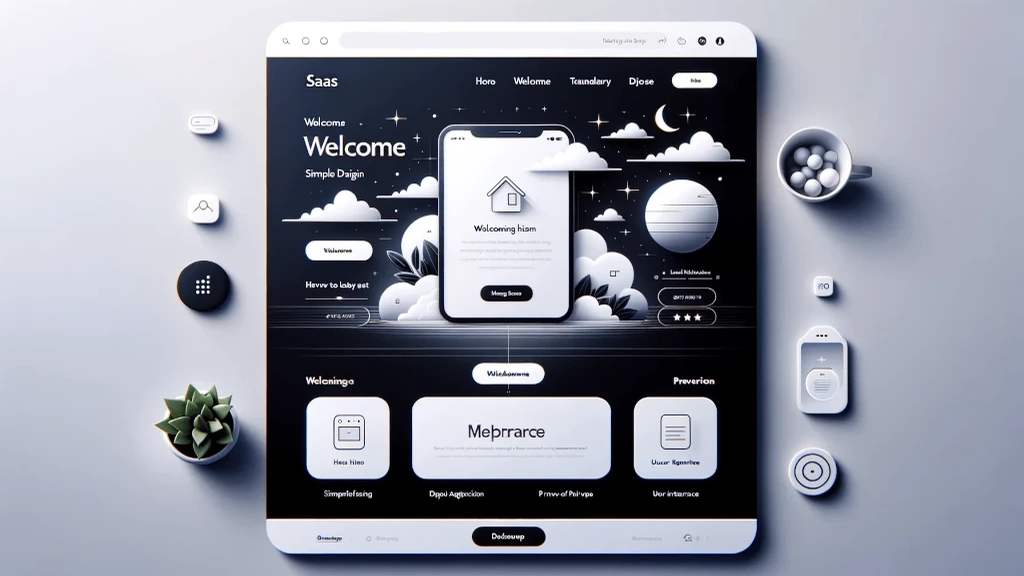
Your SaaS's home page is the gateway to your vision. It's where functionality meets appeal, shaping the first and lasting impression of your service. Here, we'll explore how to balance complexity and aesthetics to create a captivating and effective home page.
Choosing the Right Template
For simpler SaaS applications, visual appeal is paramount. I typically browse platforms like WrapBootstrap for Bootstrap-compatible templates that encapsulate the essence of the needed pages. This approach ensures that style and functionality align with your vision, while saving valuable development time.
Why Avoid Custom Styling?
Custom styling, while tempting, can become a rabbit hole. By selecting a comprehensive template, I ensure consistency and focus more on functionality rather than tweaking CSS. This strategy is about smart allocation of resources - investing time in what truly enhances the user experience.
The Process: From Template to Test
Once the ideal template is selected, the first step is integrating it into Django. This begins with setting up base.html and the landing page. The base template acts as a cornerstone, ensuring uniformity across all pages. The landing page, on the other hand, is your digital storefront. Its design and functionality should mirror the core values and offerings of your SaaS.
Building Upon the Foundation
With the base and landing page set, the focus shifts to additional pages. This process is guided by the template's structure, ensuring that each page resonates with the overall design language. It's not just about creating pages; it's about weaving a coherent digital narrative.
Your home page and UI are the digital embodiments of your brand. By choosing a suitable template and meticulously integrating it into Django, you lay down a path that leads your users from intrigue to engagement.
In our upcoming posts, we'll dive into more technical aspects, bringing your SaaS vision into a tangible reality with Django.
Choosing the Right Template
For simpler SaaS applications, visual appeal is paramount. I typically browse platforms like WrapBootstrap for Bootstrap-compatible templates that encapsulate the essence of the needed pages. This approach ensures that style and functionality align with your vision, while saving valuable development time.
Why Avoid Custom Styling?
Custom styling, while tempting, can become a rabbit hole. By selecting a comprehensive template, I ensure consistency and focus more on functionality rather than tweaking CSS. This strategy is about smart allocation of resources - investing time in what truly enhances the user experience.
The Process: From Template to Test
Once the ideal template is selected, the first step is integrating it into Django. This begins with setting up base.html and the landing page. The base template acts as a cornerstone, ensuring uniformity across all pages. The landing page, on the other hand, is your digital storefront. Its design and functionality should mirror the core values and offerings of your SaaS.
Building Upon the Foundation
With the base and landing page set, the focus shifts to additional pages. This process is guided by the template's structure, ensuring that each page resonates with the overall design language. It's not just about creating pages; it's about weaving a coherent digital narrative.
Your home page and UI are the digital embodiments of your brand. By choosing a suitable template and meticulously integrating it into Django, you lay down a path that leads your users from intrigue to engagement.
In our upcoming posts, we'll dive into more technical aspects, bringing your SaaS vision into a tangible reality with Django.