

Creating a Multilingual Django App: Translation and Internationalization Strategies
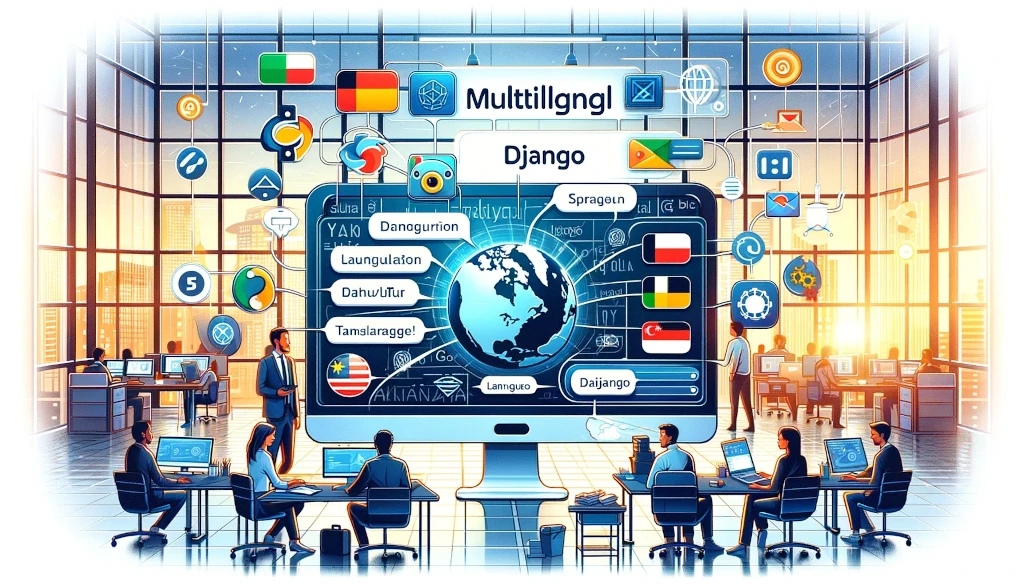
Embracing Global Reach with Django’s Translation Features
Django's robust internationalization (i18n) and localization (l10n) framework makes it easier to create multilingual applications, catering to a global audience.
Leveraging Django Rosetta and Django Modeltranslation
Rosetta is a Django application that eases the translation process of Django projects. It provides an accessible interface to manage translations. Django Modeltranslation, on the other hand, is used for model/database translation, allowing different language versions of your models.
Implementing Language Selection
The process involves setting up language codes and creating translation files for each language. Django then dynamically serves content in the user's preferred language.
Adapting Templates and Static Content
Templates and static content need adjustments to display translations correctly. Using Django’s template tags, you can ensure that your static content is also translated according to the selected language.
Implementing multilingual support in Django not only expands your app’s reach but also enhances user engagement across different regions. With tools like Rosetta and Modeltranslation, the process becomes streamlined and efficient.
Django's robust internationalization (i18n) and localization (l10n) framework makes it easier to create multilingual applications, catering to a global audience.
Leveraging Django Rosetta and Django Modeltranslation
Rosetta is a Django application that eases the translation process of Django projects. It provides an accessible interface to manage translations. Django Modeltranslation, on the other hand, is used for model/database translation, allowing different language versions of your models.
Implementing Language Selection
The process involves setting up language codes and creating translation files for each language. Django then dynamically serves content in the user's preferred language.
Adapting Templates and Static Content
Templates and static content need adjustments to display translations correctly. Using Django’s template tags, you can ensure that your static content is also translated according to the selected language.
Implementing multilingual support in Django not only expands your app’s reach but also enhances user engagement across different regions. With tools like Rosetta and Modeltranslation, the process becomes streamlined and efficient.