

Database Integration in Django: Forms, Models, and Choosing the Right Database
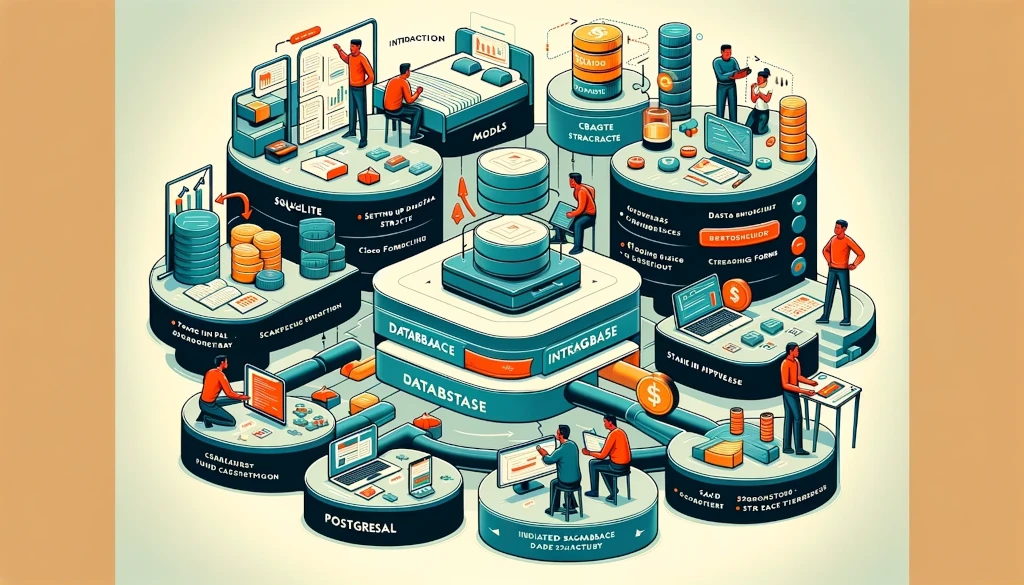
Integrating a database into a Django project is a critical step in building a robust SaaS application. This process involves setting up models to define your data structure, creating forms for data interaction, and selecting the right database for your needs. In this post, we'll explore these aspects in detail, along with the pros and cons of using a basic SQLite database versus a more advanced PostgreSQL database.
Understanding Django Models
Models in Django are the blueprint of your application's data. They define the structure of your database tables, their fields, and relationships. Django models offer a high level of abstraction, allowing you to interact with your database in a Pythonic way without writing raw SQL queries.
Creating Forms for User Interaction
Django forms are a powerful feature for handling user data input and validation. By linking forms to your models, you can create a seamless flow for data entry and updates, ensuring that the data entering your database is clean and formatted correctly.
Choosing Your Database: SQLite vs PostgreSQL
Django supports various databases, with SQLite and PostgreSQL being popular choices. SQLite is a lightweight, file-based database, ideal for development and smaller projects. Its simplicity and ease of use make it a great starting point. However, it has limitations in scalability and concurrent access.
On the other hand, PostgreSQL is a full-featured, open-source database. It excels in robustness, scalability, and supports advanced features like full-text search, JSON data types, and concurrent transactions. While it requires more setup and resources, PostgreSQL is well-suited for production-level applications and complex data handling needs.
Pros of SQLite
Simple and lightweight, no server setup required.
Ideal for development, testing, and small-scale applications.
Good performance for single-user or low-concurrency scenarios.
Cons of SQLite
Not suitable for high-traffic, scalable applications.
Limited support for advanced SQL features.
Concurrent access can be problematic.
Pros of PostgreSQL
Highly scalable and suitable for high-traffic applications.
Rich set of features including advanced indexing, full-text search, and JSON support.
Robust and reliable for production use.
Cons of PostgreSQL
Requires more setup and maintenance.
More resource-intensive than SQLite.
Might be overkill for simple, small-scale applications.
Choosing the right database for your Django application is a decision that impacts its performance, scalability, and functionality. While SQLite is a great choice for simplicity and ease of use, PostgreSQL offers advanced features and scalability for more demanding applications. Understanding your project's needs is key to making the right choice.
Understanding Django Models
Models in Django are the blueprint of your application's data. They define the structure of your database tables, their fields, and relationships. Django models offer a high level of abstraction, allowing you to interact with your database in a Pythonic way without writing raw SQL queries.
Creating Forms for User Interaction
Django forms are a powerful feature for handling user data input and validation. By linking forms to your models, you can create a seamless flow for data entry and updates, ensuring that the data entering your database is clean and formatted correctly.
Choosing Your Database: SQLite vs PostgreSQL
Django supports various databases, with SQLite and PostgreSQL being popular choices. SQLite is a lightweight, file-based database, ideal for development and smaller projects. Its simplicity and ease of use make it a great starting point. However, it has limitations in scalability and concurrent access.
On the other hand, PostgreSQL is a full-featured, open-source database. It excels in robustness, scalability, and supports advanced features like full-text search, JSON data types, and concurrent transactions. While it requires more setup and resources, PostgreSQL is well-suited for production-level applications and complex data handling needs.
Pros of SQLite
Simple and lightweight, no server setup required.
Ideal for development, testing, and small-scale applications.
Good performance for single-user or low-concurrency scenarios.
Cons of SQLite
Not suitable for high-traffic, scalable applications.
Limited support for advanced SQL features.
Concurrent access can be problematic.
Pros of PostgreSQL
Highly scalable and suitable for high-traffic applications.
Rich set of features including advanced indexing, full-text search, and JSON support.
Robust and reliable for production use.
Cons of PostgreSQL
Requires more setup and maintenance.
More resource-intensive than SQLite.
Might be overkill for simple, small-scale applications.
Choosing the right database for your Django application is a decision that impacts its performance, scalability, and functionality. While SQLite is a great choice for simplicity and ease of use, PostgreSQL offers advanced features and scalability for more demanding applications. Understanding your project's needs is key to making the right choice.