

Transitioning from MySQL to PostgreSQL: Insights into migrating databases from MySQL to PostgreSQL, covering challenges and best practices
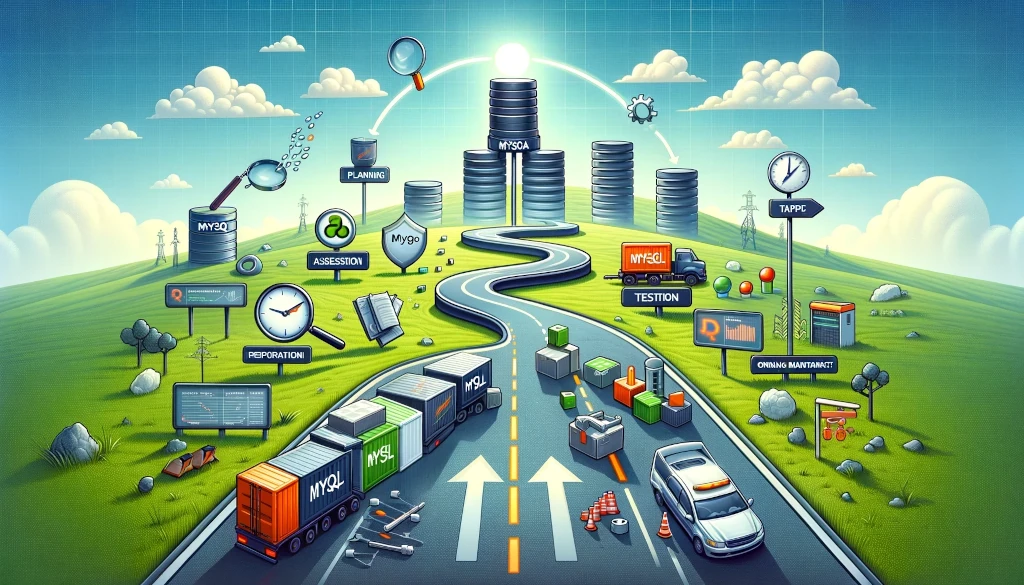
Transitioning from MySQL to PostgreSQL in the context of a Django application involves several steps, each with its own set of challenges and best practices. Here's an overview of the process and key considerations:
1. Assessment and Planning
Challenge: Understanding the schema and data differences between MySQL and PostgreSQL. This includes data types, indexing, and stored procedures.
Best Practice: Conduct a thorough assessment of the existing database schema and any application-specific requirements. Use tools like pgloader or custom scripts to map MySQL data types to PostgreSQL equivalents.
2. Preparation of the Django Application
Challenge: Ensuring compatibility of Django models and queries with PostgreSQL.
Best Practice: Update Django settings to use PostgreSQL as the database backend (django.db.backends.postgresql). Review and update models and custom SQL queries to leverage PostgreSQL features and syntax.
3. Data Migration
Challenge: Migrating data without loss or corruption and minimizing downtime.
Best Practice: Use database migration tools (like pgloader) for data transfer. Test the migration process on a staging environment first. For large databases, consider incremental migration strategies to reduce downtime.
4. Testing and Validation
Challenge: Ensuring data integrity and application functionality post-migration.
Best Practice: Perform comprehensive testing, including unit tests, integration tests, and system tests. Validate data integrity and consistency. Use Django's testing framework to automate this process.
5. Performance Tuning
Challenge: Optimizing database performance in the new environment.
Best Practice: Analyze query performance using PostgreSQL's EXPLAIN and logging features. Optimize indexes, and consider PostgreSQL-specific features like materialized views for performance improvements.
6. Deployment and Monitoring
Challenge: Ensuring smooth transition to the new database in the production environment.
Best Practice: Plan for a controlled cutover to the new database with minimal downtime. Implement robust monitoring to quickly identify and address any performance or stability issues.
7. Ongoing Maintenance
Challenge: Adapting to new maintenance tasks and best practices specific to PostgreSQL.
Best Practice: Regularly update statistics, monitor database logs, and perform routine maintenance tasks like vacuuming. Stay informed about PostgreSQL updates and best practices.
Additional Considerations:
Backup and Recovery: Establish a robust backup and recovery strategy for PostgreSQL.
Security: Review and implement PostgreSQL security best practices, including roles and permissions.
Scalability: Plan for future scalability, possibly leveraging PostgreSQL features like partitioning.
Migrating from MySQL to PostgreSQL in a Django application is a complex process that requires careful planning and execution. By addressing the specific challenges and following best practices, you can ensure a smooth and successful transition. Remember to thoroughly test the application and the new database environment before going live.
1. Assessment and Planning
Challenge: Understanding the schema and data differences between MySQL and PostgreSQL. This includes data types, indexing, and stored procedures.
Best Practice: Conduct a thorough assessment of the existing database schema and any application-specific requirements. Use tools like pgloader or custom scripts to map MySQL data types to PostgreSQL equivalents.
2. Preparation of the Django Application
Challenge: Ensuring compatibility of Django models and queries with PostgreSQL.
Best Practice: Update Django settings to use PostgreSQL as the database backend (django.db.backends.postgresql). Review and update models and custom SQL queries to leverage PostgreSQL features and syntax.
3. Data Migration
Challenge: Migrating data without loss or corruption and minimizing downtime.
Best Practice: Use database migration tools (like pgloader) for data transfer. Test the migration process on a staging environment first. For large databases, consider incremental migration strategies to reduce downtime.
4. Testing and Validation
Challenge: Ensuring data integrity and application functionality post-migration.
Best Practice: Perform comprehensive testing, including unit tests, integration tests, and system tests. Validate data integrity and consistency. Use Django's testing framework to automate this process.
5. Performance Tuning
Challenge: Optimizing database performance in the new environment.
Best Practice: Analyze query performance using PostgreSQL's EXPLAIN and logging features. Optimize indexes, and consider PostgreSQL-specific features like materialized views for performance improvements.
6. Deployment and Monitoring
Challenge: Ensuring smooth transition to the new database in the production environment.
Best Practice: Plan for a controlled cutover to the new database with minimal downtime. Implement robust monitoring to quickly identify and address any performance or stability issues.
7. Ongoing Maintenance
Challenge: Adapting to new maintenance tasks and best practices specific to PostgreSQL.
Best Practice: Regularly update statistics, monitor database logs, and perform routine maintenance tasks like vacuuming. Stay informed about PostgreSQL updates and best practices.
Additional Considerations:
Backup and Recovery: Establish a robust backup and recovery strategy for PostgreSQL.
Security: Review and implement PostgreSQL security best practices, including roles and permissions.
Scalability: Plan for future scalability, possibly leveraging PostgreSQL features like partitioning.
Migrating from MySQL to PostgreSQL in a Django application is a complex process that requires careful planning and execution. By addressing the specific challenges and following best practices, you can ensure a smooth and successful transition. Remember to thoroughly test the application and the new database environment before going live.